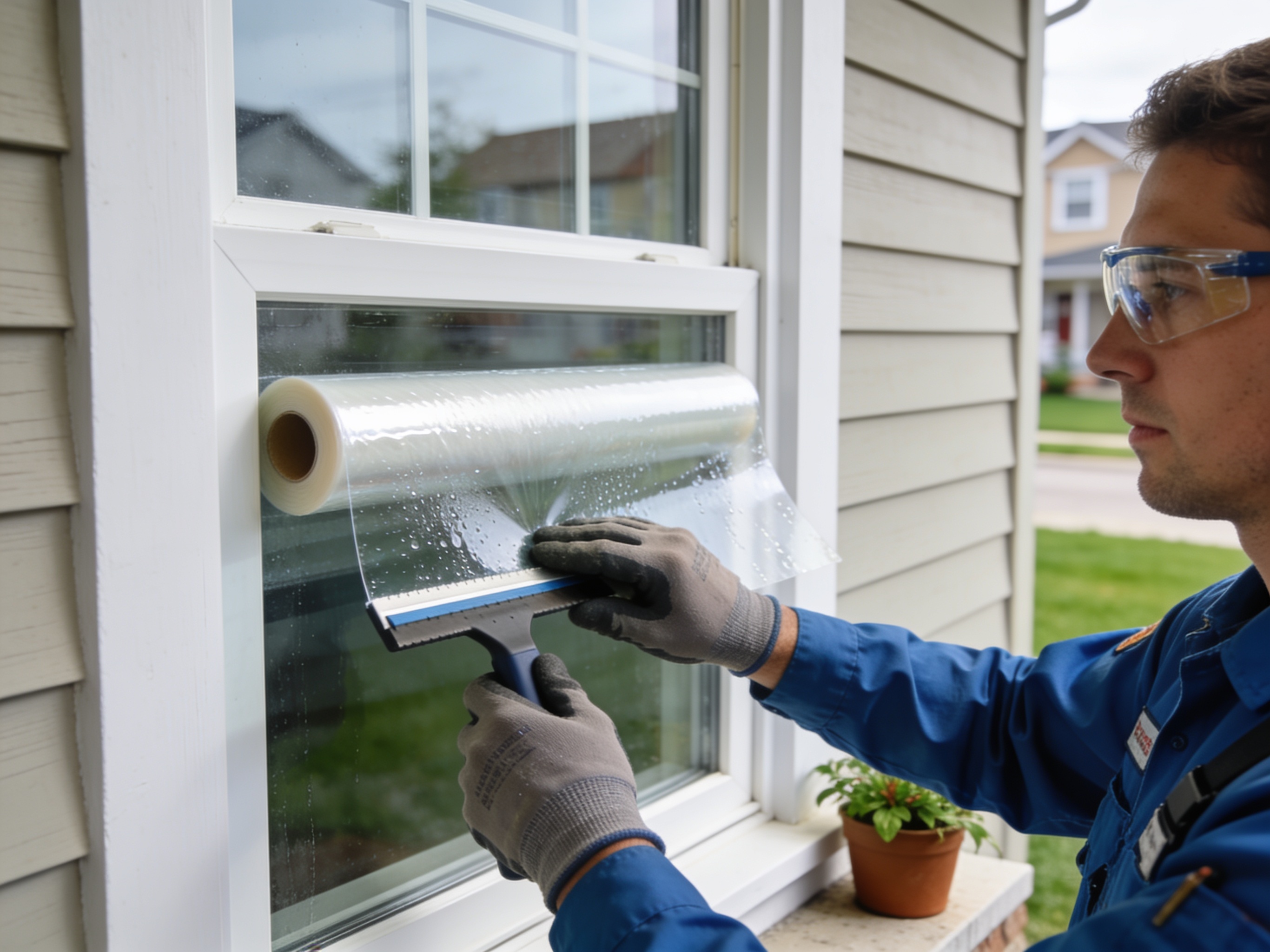
Ontario’s hot-summer Mediterranean climate drives the need for quality residential window tinting. Summers regularly push past 95 degrees while winters stay mild, so homeowners in neighborhoods like Ontario Ranch and Creekside see large daily temperature swings that cheap dyed films cannot handle without bubbling or fading. Ceramic films block up to 80 percent of infrared heat and 99 percent of UV rays without interfering with cell signals or factory glass warranties.
Most single-family homes in Downtown Ontario, Guasti and North Ontario date from the 1970s through 1990s and feature large aluminum-framed sliders plus older dual-pane units. These frames expand and contract with heat, so proper edge sealing and film shrinkage control during installation prevent delamination later. Mobile service from 520 S Cypress Ave lets us work at the property in Armstrong or near Ontario Mills without moving vehicles.
San Bernardino County building codes do not restrict visible-light transmission on residential windows, yet many HOA rules in Ontario Ranch limit darkness levels. We match film to each elevation’s sun load—south and west exposures receive higher-performance ceramic while north-facing windows often receive lighter glare-control film. This targeted approach keeps interior temperatures even across the house.
Proximity to Ontario International Airport and the 10/15 freeways adds dust and pollen that settle on glass during install. We clean with lint-free methods and cure films in shaded driveways or garages to avoid contamination common in this area.
Technician insight
In Ontario the thing that catches most people out with residential window tinting is picking cheap dyed film for the big west-facing sliders common in 1980s Creekside and Ontario Ranch homes; those films bubble within two summers when daytime highs hit the high 90s and the glass heats up fast.
West-Facing Slider in Ontario Ranch
Homeowner reported afternoon heat pouring through a 6-by-8-foot slider. We found standard dual-pane glass with no prior film and aluminum frame expansion gaps. Installed high-performance ceramic film cut to the exact size, sealed edges, and returned after three days to confirm full adhesion. Interior temperature dropped noticeably during the next heat wave.
Residential Window Tinting Services We Offer
✓Ceramic Heat Rejection Tinting
Applies non-metallic ceramic film that reduces interior heat gain by up to 80 percent on south- and west-facing windows common in Ontario Ranch homes.
✓UV Protection Window Film
Blocks 99 percent of ultraviolet rays to protect furniture and flooring from fading in the intense summer sun of San Bernardino County.
✓Glare Reduction Tinting
Light ceramic films cut afternoon glare on east-facing windows without darkening views toward Cucamonga-Guasti Regional Park.
✓Privacy Window Film
One-way reflective films provide daytime privacy for street-facing windows in denser neighborhoods like Downtown Ontario and Guasti.
✓Dual Pane Window Tinting
Special low-shrink ceramic films designed for dual-pane insulated glass found in 1980s–1990s homes throughout North Ontario and Creekside.
Residential Window Tinting Cost in Ontario, CA
| Service | Typical Range | What Affects It |
|---|---|---|
| Single Story 3-Bedroom Home | $650–$1,400 | Varies by number of large sliders and film grade chosen |
| South/West Elevation Only | $350–$750 | Focuses on highest heat-load windows in hot summers |
| Full Dual-Pane Upgrade | $900–$2,200 | Higher for older aluminum frames requiring extra prep |
| Privacy Film Addition | $200–$450 | Added to street-facing windows in denser neighborhoods |
Ranges are typical for Ontario, CA and confirmed with an exact written quote before any work starts.
How it works
- 1
On-Site Assessment
We visit your Ontario address to measure windows, note glass type, and check sun exposure from nearby freeways or open terrain.
- 2
Film Selection
Recommend ceramic grades matched to your home’s age, window orientation, and any HOA darkness limits.
- 3
Precision Cutting
Computer-cut patterns ensure clean edges around sliders and divided lites common in local housing stock.
- 4
Installation and Curing
Apply film in shaded conditions, squeegee out moisture, and advise on 3–5 day curing time during mild winter or hot summer days.
Pricing
Most residential jobs range from several hundred to a few thousand dollars depending on window count and film performance; we provide upfront quotes after measuring.